Key Characteristics of Shredder Blades During Operation
Shredder blades are designed to reduce recyclable materials—including glass, aluminum, concrete, plastics, coal, rubber, and other hard materials—into smaller, reusable particles. Because these materials are often highly abrasive, the cutting edges of the blades gradually become dull during operation.
A dull blade significantly reduces shredding efficiency, increases energy consumption, and accelerates wear on other machine components. Maintaining sharp, high-quality blades is therefore essential for maximizing productivity, minimizing downtime, and lowering overall operating costs.
Why Sharp Blades Matter
When shredder blades lose their cutting edge, they can cause:
- Reduced cutting efficiency
- Lower production throughput
- Increased power consumption
- Excessive wear on the rotor and other machine components
- More frequent maintenance and blade replacement
- Higher operating costs
Regular blade maintenance, professional regrinding, or timely replacement helps restore cutting performance and extends the service life of the entire shredding system.
Shredder Blades in Industrial Applications
Industrial shredders play an essential role in modern manufacturing and recycling industries. They are widely used for processing plastic waste, electronic scrap, wood, rubber, tires, metals, and many other recyclable materials.
Among these applications, plastic shredders are one of the most common. The quality of the shredder blade directly determines the cutting performance, particle size consistency, and overall efficiency of the recycling process.
Proper machine setup and skilled operation also play an important role in achieving the best cutting results while maximizing blade life.
Types of Shredder Blades
Shredder blades are generally available in two main construction types:
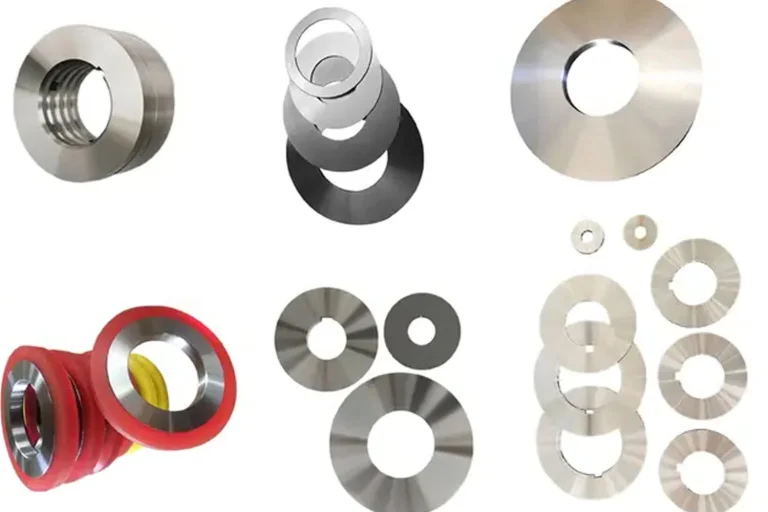
Solid Steel Blades
Manufactured entirely from high-quality tool steel, these blades offer excellent overall strength and are suitable for a wide range of general shredding applications.
Carbide-Tipped or Steel-Inlaid Blades
These blades combine a tough steel body with wear-resistant cutting edges, providing improved durability and longer service life when processing highly abrasive materials.
Both types are available in various sizes and configurations to suit different shredder models and operating conditions.
Rotary Blades and Stationary Blades
A typical shredder uses two types of blades:
Rotary Blades (Moving Blades)
Mounted on the rotating shaft, rotary blades perform the primary cutting action. Their position and cutting angle can be adjusted according to the application to optimize cutting efficiency.
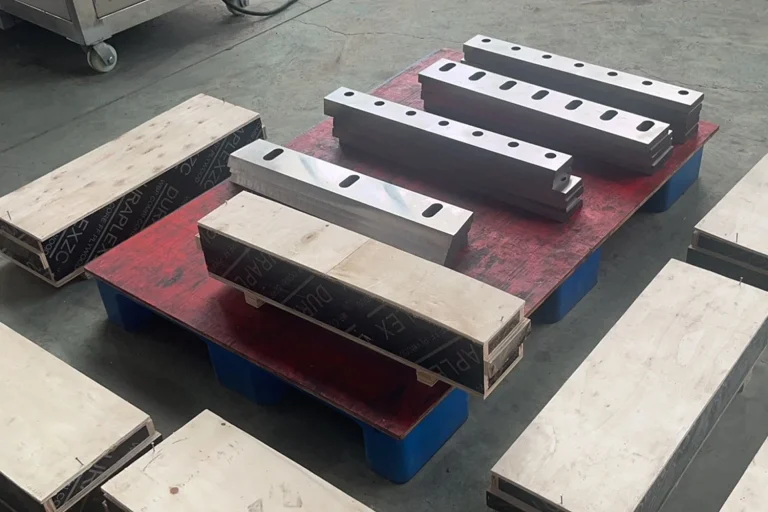
Stationary Blades (Fixed Blades)
Stationary blades are securely mounted inside the shredder housing. They work together with the rotary blades to create the shearing action required for efficient material size reduction.
By precisely adjusting the clearance and cutting angle between the moving and stationary blades, operators can:
Extend overall blade service life
Improve shredding efficiency
Produce more consistent particle sizes
Reduce blade wear
Minimize the risk of edge chipping
High-performance shredder blades depend on more than just the blade material. The best results are achieved through the combination of:
- Premium tool steel selection
- Precision CNC machining
- Optimized cutting edge geometry
- Professional vacuum heat treatment
- Correct blade clearance and alignment
- Regular inspection and maintenance
When properly designed, installed, and maintained, shredder blades deliver higher productivity, longer service life, and lower total operating costs for industrial shredding applications.