How to Choose the Right Shredder Blades?
The recycling and waste-to-energy industries process a wide variety of materials, each with different physical properties. In most cases, one type of shredder or blade cannot efficiently process every material. Selecting the wrong shredder blade not only reduces shredding performance but can also shorten the service life of both the blades and the machine.
Different types of shredders require different blade designs. The two most common configurations are single-shaft shredders and dual-shaft shredders, each using blades specifically engineered for its operating principle.
Advantages of Single-Shaft Shredders
Single-shaft shredders are widely used because they offer several important benefits:
- Uniform particle size after shredding, producing consistent output.
- High driving power, allowing efficient processing of a wide range of materials.
- Lower material loss during the shredding process, improving material recovery.
- Low maintenance costs, making them economical for long-term operation.
Because of these advantages, single-shaft shredders are commonly used for processing:
- Biomass
- Plastic films
- Plastic containers
- Wood waste
- Metal scrap
- Glass fiber–reinforced plastics (FRP)
- Composite materials
- Various industrial solid wastes
Why Blade Selection Is So Important
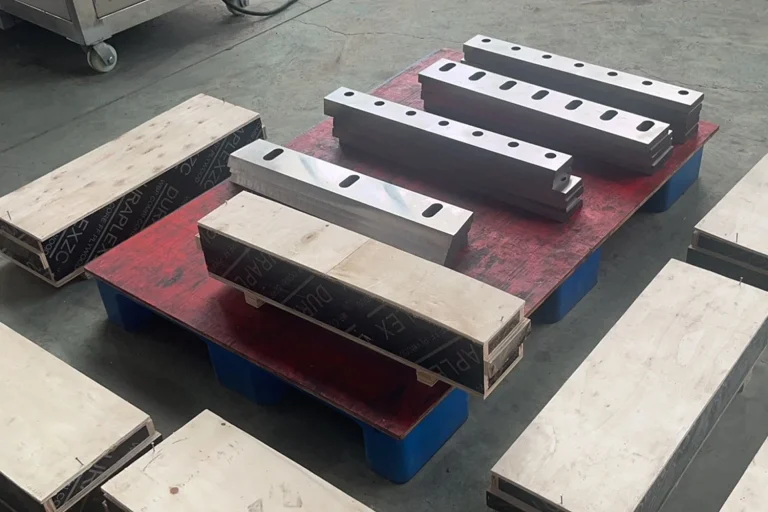
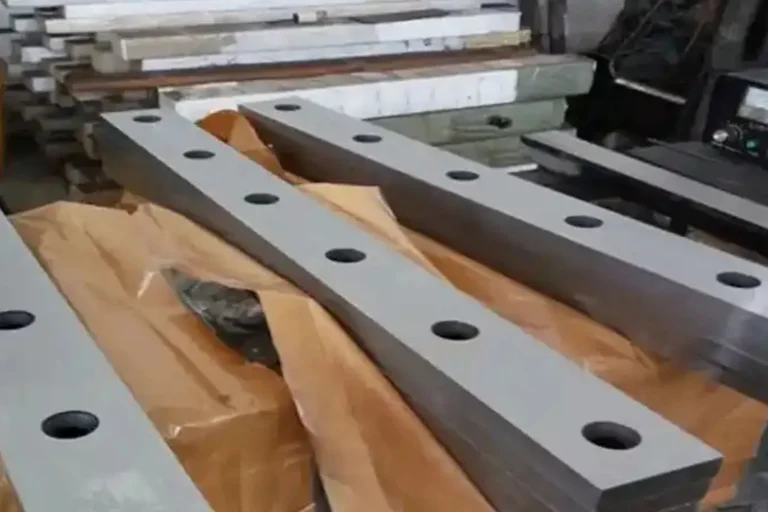
The shredder blade is one of the most critical components of a single-shaft shredder. Blade performance directly affects:
- Cutting efficiency
- Particle size consistency
- Machine reliability
- Energy consumption
- Blade service life
- Overall production costs
When selecting shredder blades, it is essential to match the blade design and material to both the shredder model and the material being processed.
Choose Blades Based on the Material
Most recyclable materials used in industrial production can generally be grouped into three categories:
- Wood
- Plastics and rubber
- Metals
Each material has different hardness, toughness, and abrasion characteristics, requiring a blade specifically designed for that application.
For example, metal shredding requires heavy-duty shredder blades manufactured from high-strength, wear-resistant tool steels capable of withstanding extreme impact loads.
Match the Blade to the Machine
The primary factor when selecting a shredder is the machine’s power output.
For example:
- Metal shredders require significantly higher power than machines used for wood or plastic recycling.
- Once the appropriate shredder has been selected, the blade material, geometry, hardness, and dimensions should be customized according to both the machine specifications and the material being processed.
Proper blade matching ensures maximum cutting performance while minimizing wear and maintenance.
Benefits of Selecting the Right Shredder Blade
Choosing the correct shredder blade provides several advantages:
- Higher shredding efficiency
- Longer blade service life
- Lower operating and maintenance costs
- Reduced machine downtime
- Improved energy efficiency
- Better utilization of recyclable materials
For single-shaft shredders, blade selection should always be based on the characteristics of the material being processed. Properly engineered blades allow the machine to operate more efficiently, maximize resource recovery, and significantly improve the overall productivity of recycling operations.