How to Choose the Right Slitting Machine Blades
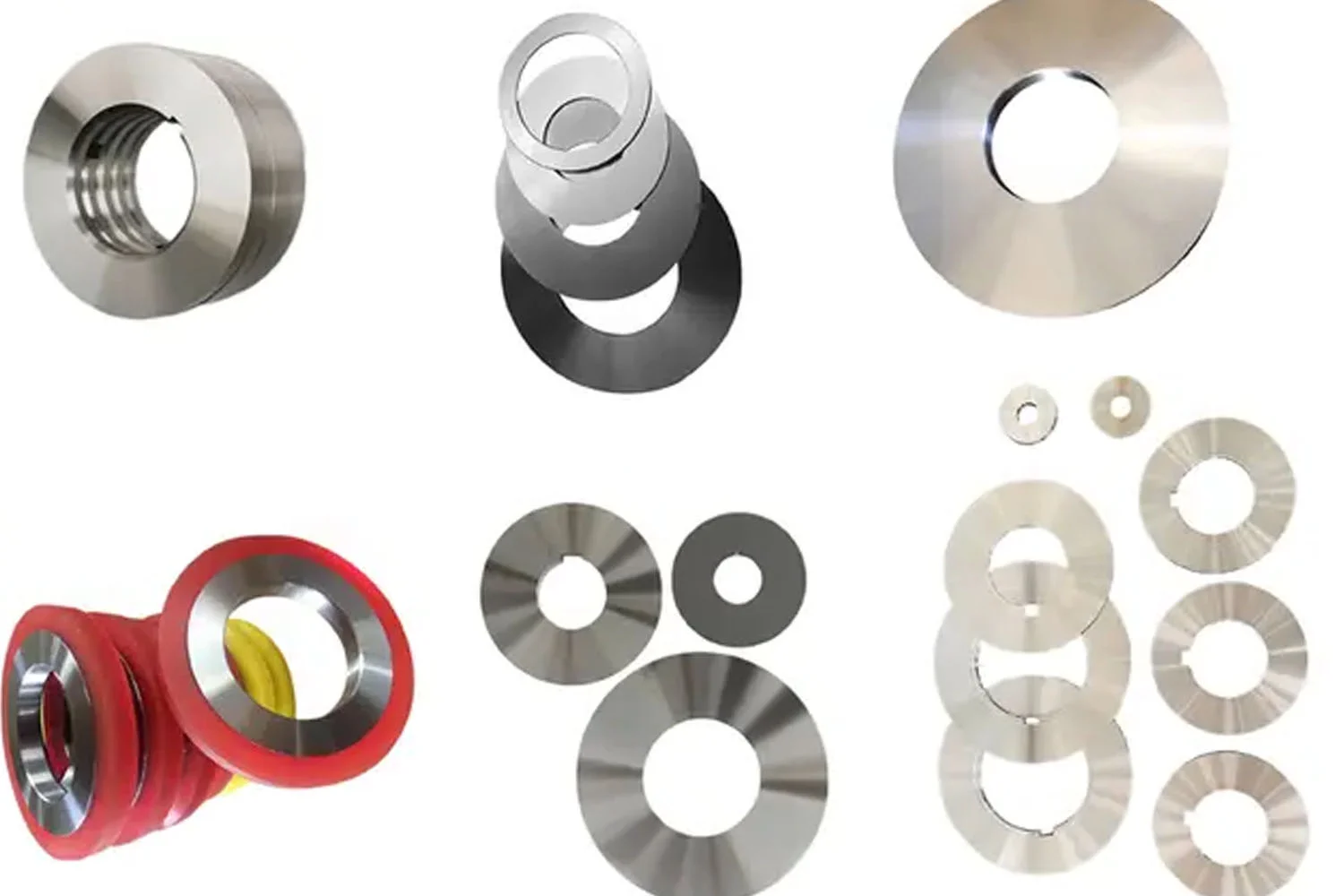
Slitting machine blades are one of the most critical components of a slitting system. Their primary function is to cut large rolls of material into narrower rolls according to production requirements.
Choosing the wrong slitting blade—or selecting a blade that is not properly matched to the machine configuration—can result in poor cutting quality, burrs, excessive dust generation, reduced cutting accuracy, and lower production speed. It also accelerates blade wear, increases material waste, and raises overall production costs.
1.Understand the Two Main Types of Rotary Slitting
Rotary slitting generally falls into two categories:
- Shear Slitting (Upper & Lower Circular Knives)
- Crush Slitting (Rotary Crush Cutting)
Shear slitting is the preferred method for processing thick plastic films, laminated films, paper, and similar materials. For film thicknesses greater than 100 μm, shear slitting is generally recommended because it provides cleaner cuts and higher precision.
2.Choose the Appropriate Shear Slitting Method
Upper and lower circular knife systems are widely used and can be divided into two configurations:
Tangential Shear Slitting
In tangential slitting, the material passes through the tangent point of the upper and lower circular knives.
Advantages:
- Easy knife adjustment
- Blade positions can be quickly changed to accommodate different slit widths
Disadvantages:
- The material tends to drift during cutting
- Lower slitting accuracy
- Rarely used today for high-precision applications
Non-Tangential Shear Slitting
In non-tangential slitting, the material wraps around the lower knife at a certain contact angle before being cut.
Advantages:
- Reduced material drift
- Higher cutting accuracy
- Better edge quality
Disadvantages:
- More complicated knife setup
- The lower knife shaft usually needs to be removed for blade replacement or adjustment
This method is particularly suitable for thicker laminated films and paper products.
3.Consider Crush Slitting for Flexible Applications
Rotary crush slitting is less common than shear slitting but offers several advantages for certain applications.
This system typically consists of:
- A pneumatic rotary knife
- A bottom roller synchronized with the material speed
- Adjustable blade pressure
Crush slitting is suitable for:
- Thin plastic films
- Thick paper
- Nonwoven fabrics
- Other flexible materials
Its simple adjustment and versatile application make it an increasingly popular solution in modern slitting systems.
4.Match the Blade to Your Machine—Not Just the Brand
When selecting slitting blades, compatibility with your machine is far more important than choosing an imported or domestic brand.
Many users assume that imported blades automatically offer better performance. However, even the highest-quality blade will perform poorly if it is not designed for the specific machine configuration and application.
The best blade is the one that matches:
- Your slitting machine
- The material being processed
- Cutting speed
- Material thickness
- Production requirements
Proper blade selection delivers better cutting quality, longer service life, and lower operating costs.
5.Blade Performance Depends on Proper Application
There is no universally “best” slitting blade.
Blade performance is always determined by the combination of:
- Blade material
- Heat treatment
- Edge geometry
- Machine setup
- Operating conditions
An imported blade used incorrectly may fail quickly, while a well-designed domestic blade matched to the correct application can achieve excellent cutting performance and long service life.
The key to successful slitting is selecting the right blade for your specific production process—not simply choosing the most expensive option.