How to Select the Right Blade Geometry for Custom Industrial Blades
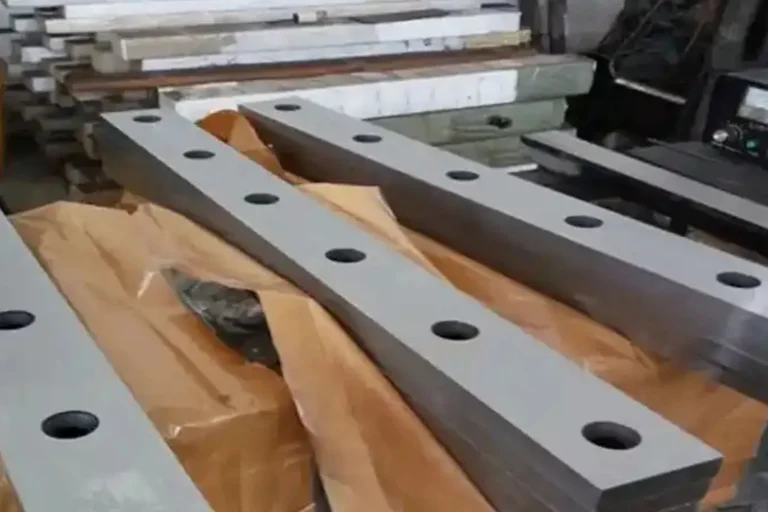
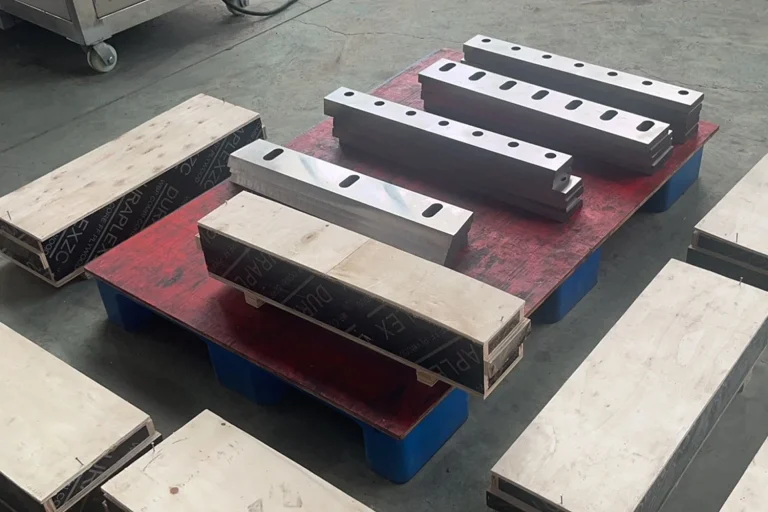
Selecting the appropriate blade geometry is one of the most important factors in custom blade design. Cutting performance is influenced not only by the blade angle, but also by the blade material, coating, edge preparation, and machining conditions. Optimizing these factors helps improve cutting efficiency, extend blade life, and reduce production costs.
1.Choosing the Right Blade Coating
Blade coatings provide several important advantages, including:
- Higher surface hardness
- Improved wear resistance
- Lower coefficient of friction
- Better resistance to heat and oxidation
- Longer tool life
A properly selected coating reduces friction between the blade and the workpiece, resulting in smoother cutting, lower cutting temperatures, and improved machining performance.
Overall, blade material, geometry, coating, edge preparation, and machining conditions all play essential roles in determining the service life and performance of a custom blade.
- Stick to posting schedules that work
- Giveaways are a great way to get people into your community
- Look into your insights to see when your audience is active on Instagram
- Always be clear on what your CTA is
2.Selecting the Proper Blade Geometry
Choosing the correct cutting geometry is critical for achieving optimal performance.
An appropriate blade angle can:
- Reduce cutting vibration
- Improve cutting stability
- Lower cutting forces
- Produce cleaner cutting edges
- Minimize edge chipping, especially when machining brittle materials such as graphite
Blade geometry—including rake angle, clearance angle, included angle, and edge radius—should always be designed according to the material being processed and the specific cutting application.
3.Selecting the Right Blade Material
The blade material is one of the most important factors affecting cutting performance.
It directly influences:
- Cutting efficiency
- Machining quality
- Tool life
- Manufacturing cost
- Overall productivity
In general:
- Higher hardness provides better wear resistance.
- Higher hardness usually results in lower impact toughness.
- As hardness increases, the material generally becomes more brittle.
Therefore, selecting the appropriate material requires balancing wear resistance and toughness based on the operating conditions.
4.Match the Coating to the Cutting Process
Different cutting operations require different coating technologies.
For example:
- Turning
- Drilling
- Milling
Each process has unique cutting conditions. Milling, in particular, involves intermittent cutting and repeated impact loading, requiring coatings that can withstand cyclic mechanical stress.
Early coating technologies primarily focused on increasing hardness and wear resistance.
One of the most common examples is Titanium Nitride (TiN) coating, which offers excellent wear resistance but has a relatively high coefficient of friction (approximately 0.4–0.6).
During machining, this higher friction generates additional heat between the cutting edge and the workpiece.
To prevent excessive tool temperature, thermal deformation, and reduced machining accuracy, cutting fluids are commonly used to:
- Reduce friction
- Improve cooling
- Extend blade life
- Maintain machining precision
Achieving the Best Cutting Performance
The performance of a custom blade depends on the combination of several engineering factors:
- Premium blade material
- Optimized cutting geometry
- Appropriate surface coating
- Proper edge preparation
- Suitable machining conditions
- Effective cooling and lubrication
By carefully balancing these elements, manufacturers can maximize cutting efficiency, improve product quality, reduce tooling costs, and significantly extend blade service life.